Come Drink with Me: The Foundation of Shaw Brothers Martial Arts Cinema
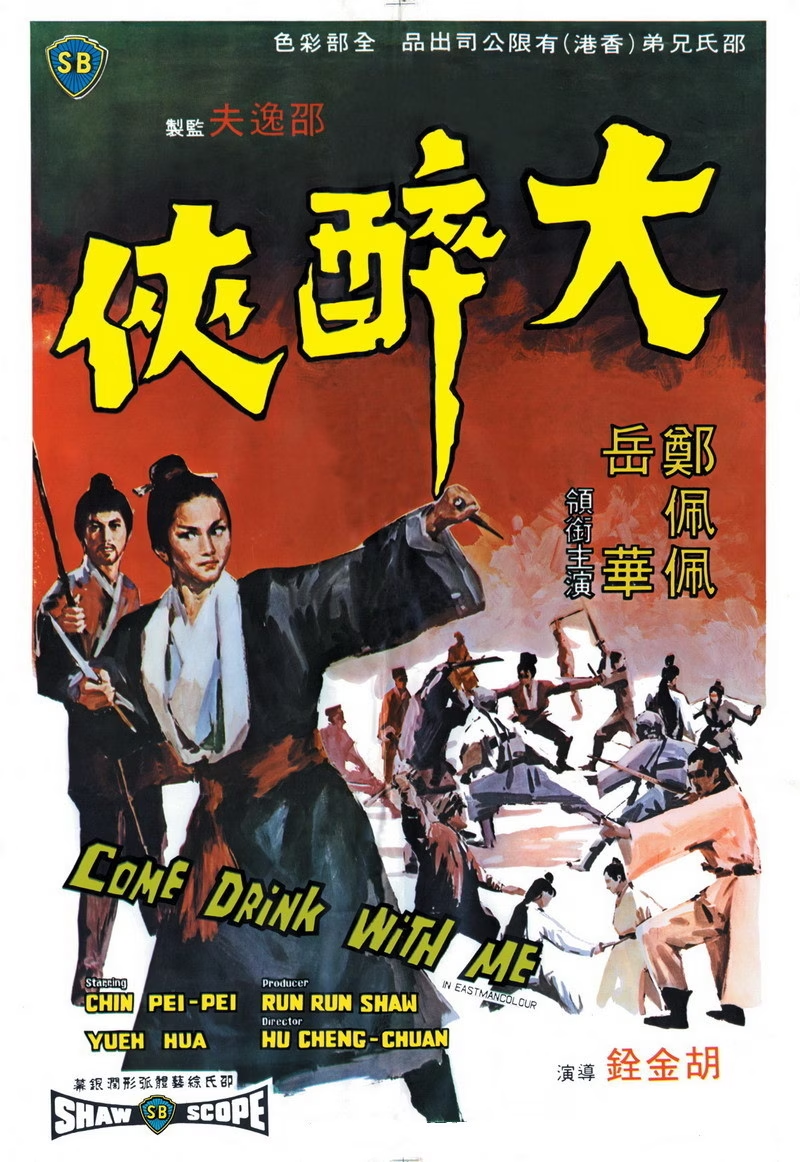
Come Drink with Me - Hu Jinquan's first martial arts film and the pioneering work of Shaw Brothers' new school of martial arts cinema. Its status and significance are naturally monumental. In 1966, such a color martial arts film was groundbreaking, but fifty-six years later, does it still hold viewing value?
Introduction
Come Drink with Me, Hu Jinquan’s first martial arts film and the pioneering work of Shaw Brothers’ new school of martial arts cinema, naturally holds tremendous status and significance. In 1966, such a color martial arts film was groundbreaking, but fifty-six years later, does it still hold viewing value?
Body
Cast
The cast of this film is commendable. Although the film is titled Come Drink with Me, the undisputed protagonist of the first half is Golden Swallow, played by Zheng Peipei. Zheng’s performance in this film is stunning for a novice actress. Her beautiful appearance combined with martial arts movements full of heroic spirit not only made her a star, but also made the male lead played by Yue Hua, the Drunken Hero, appear somewhat overshadowed by comparison.
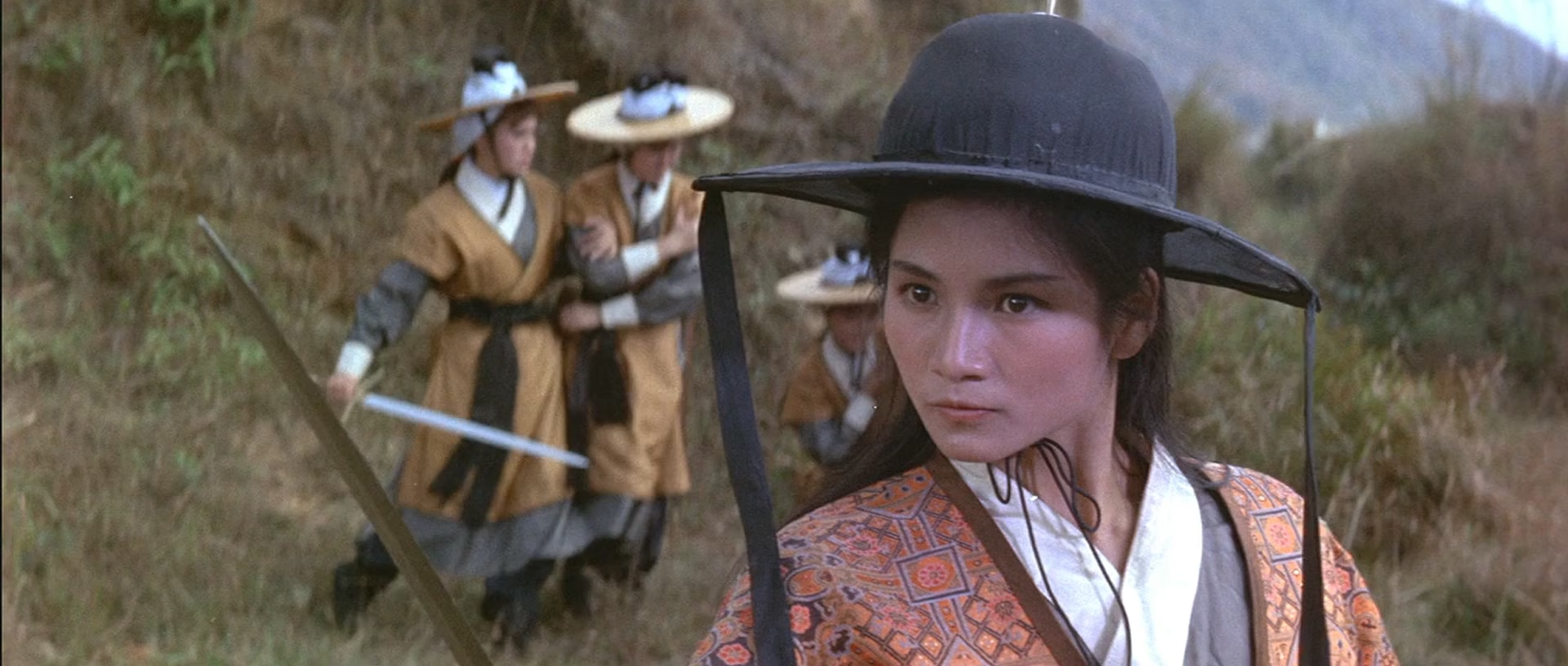
By the way, the last time I saw Zheng Peipei’s performance was in her role as Maria in the 2017 film Meditation Park. I still remember Zheng’s image in that film vividly.
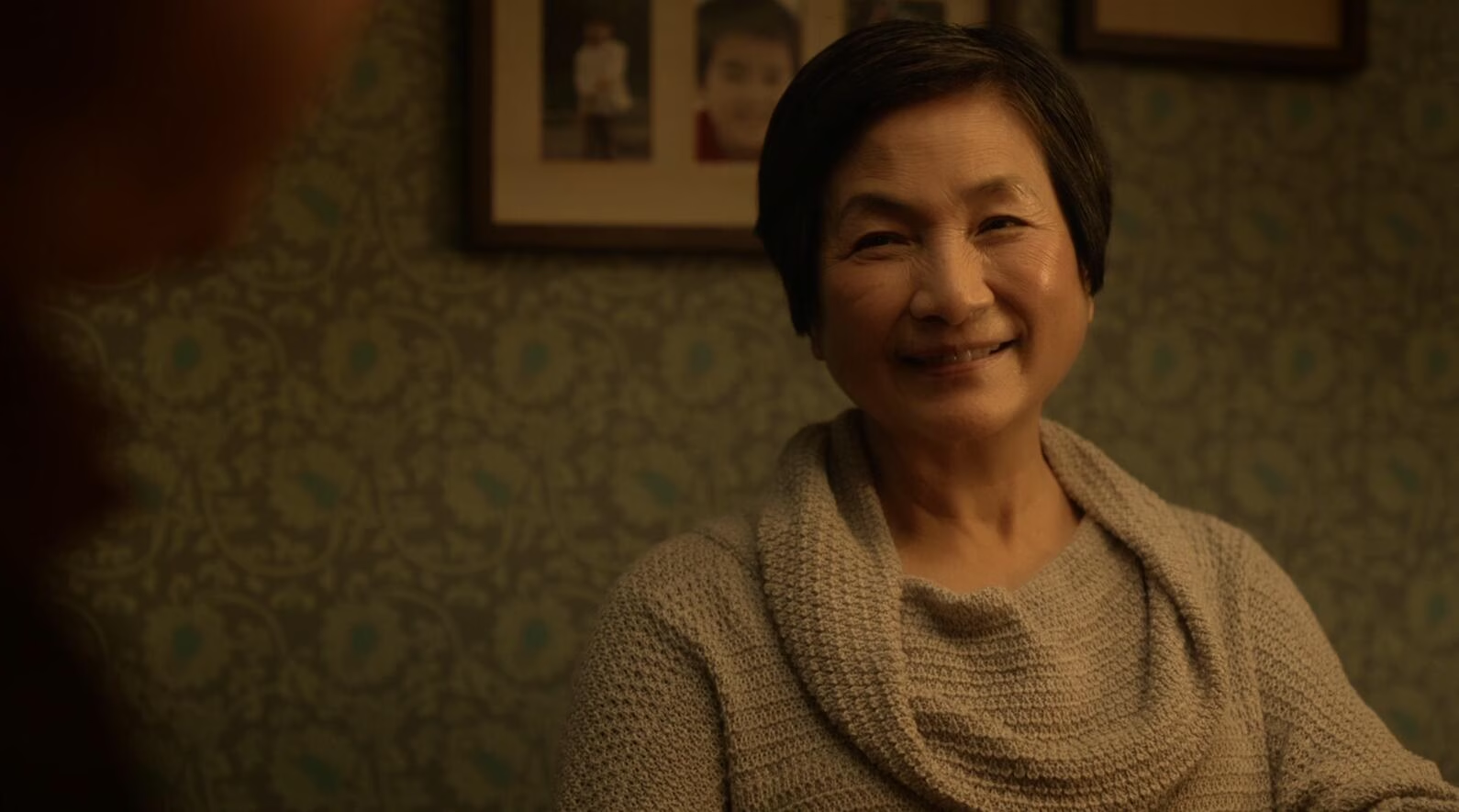
Reflecting on the future real-life stories of several main cast members in this film, one cannot help but sigh with emotion.
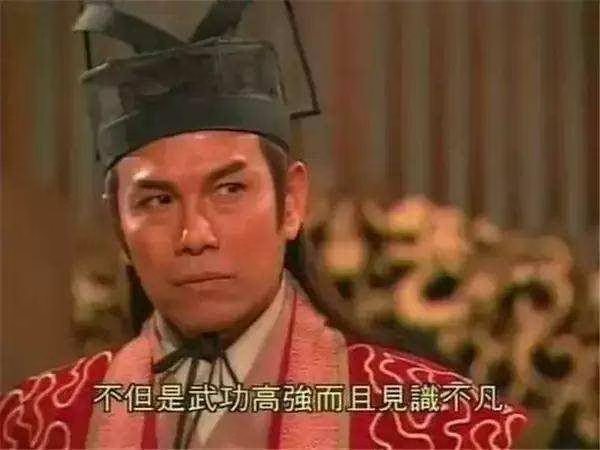
Returning to the main topic, among the group of child extras in Come Drink with Me, there is no shortage of names familiar to us. Hong Jinbao, Cheng Long, Yuan Biao, and many other future renowned martial arts stars all appear in the film. There’s also Chen Honglie who plays the villain Jade-faced Tiger, more famous for his role as Zuo Lengchan in The Smiling, Proud Wanderer.
Fight Choreography
As a martial arts film, the fight scenes in Come Drink with Me are competent. Although the action choreography shows obvious signs of staged fighting, thanks to camera work and editing, the overall effect is not unacceptable even by today’s standards. My biggest complaint is that all long-range weapon attacks, including hidden weapons and bows and arrows, are realized through a shot of firing edited with a shot of hitting the target. The flight process is directly omitted. If this only appeared once or twice, it would be fine, but unfortunately there are a large number of such shots in the film, making it hard not to notice.
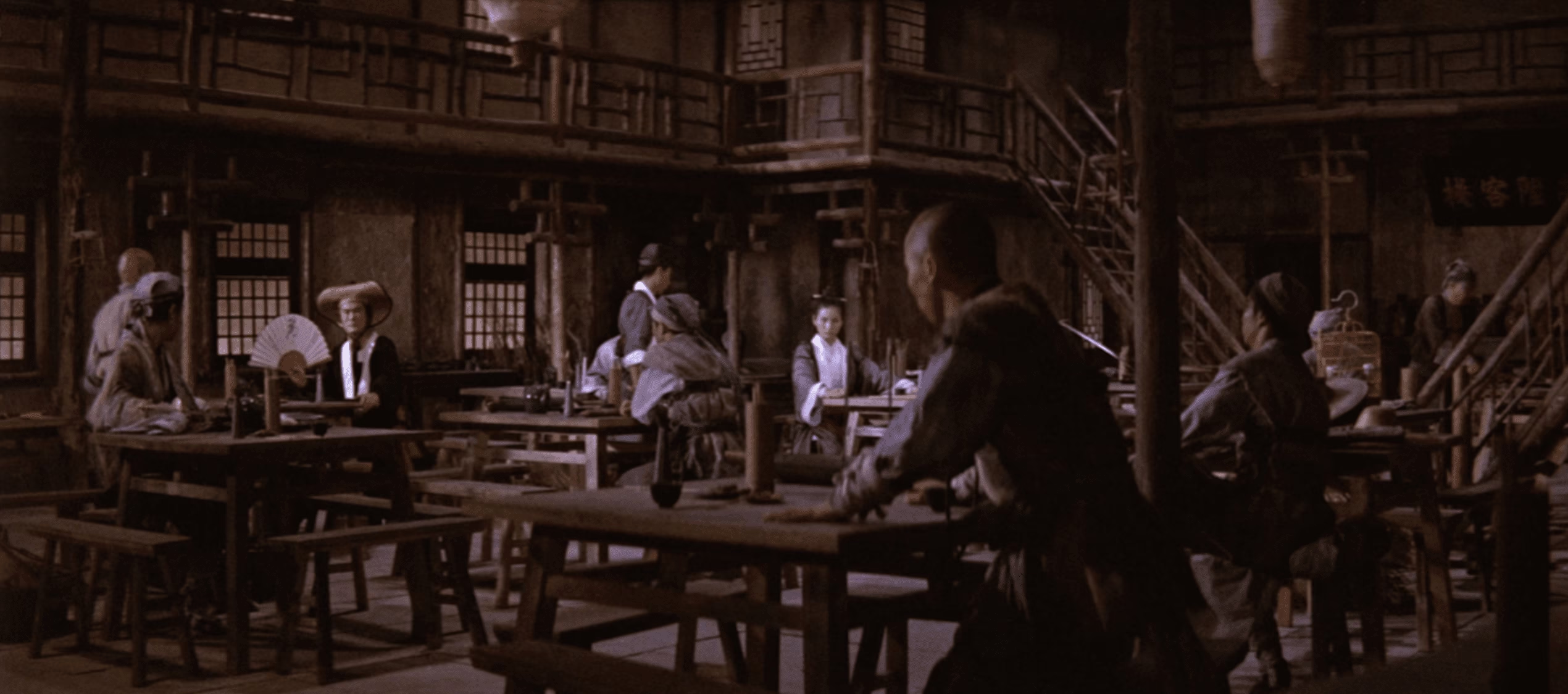
The first martial arts fight scene of Golden Swallow, the true protagonist of the first half of Come Drink with Me, takes place in an inn. The mise-en-scène of this fight scene is commendable. Zheng Peipei’s ballet foundation combined with folk-featured music even creates a Peking opera feeling. The probing segment before the fight starts is very interesting. A plot detail that left an impression on me is when the inn waiter asks Golden Swallow what she would like to order, and she asks for four taels of tiger bone papaya wine. The camera cuts to a medium close-up of the waiter, showing his eyes looking to the left, then matching the eyeline to Smiling Tiger’s expression. But at this point, the audience doesn’t know Smiling Tiger’s name yet. The subtext of that line isn’t revealed until the two start talking later, when the audience realizes that the four taels of tiger bone papaya wine was a probe for Smiling Tiger.
Flaws
The plot line of this film is very simple, interweaving a story of bandits kidnapping a high official’s child hoping for a hostage exchange, with Golden Swallow going to rescue, and a story of senior and junior fellow apprentices fighting for the position of sect leader. In many places, one can see commercial considerations. Just like how this film could have been titled Golden Swallow, but possibly due to market considerations, Shaw Brothers believed a male hero protagonist was still necessary. These choices are understandable given the highly competitive environment Come Drink with Me was in. Although this film cannot be called perfect, especially the very hasty ending, which reduces the heroic and extraordinary Golden Swallow塑造 in the first half to a character who cannot accomplish anything without the help of the Drunken Hero. The final duel between the senior and junior fellow apprentices is also merely passable.
Summary
The strengths and weaknesses of Come Drink with Me are both very pure. This is also the biggest advantage of Come Drink with Me compared to martial arts films from the early 2000s: purity. As the film that launched the Shaw Brothers martial arts era, with Zheng Peipei as the lead actress and Hu Jinquan as the director marking his first career spring, Come Drink with Me still retains viewing value even fifty years later today.
References
- “Come Drink with Me”. King Hu. Shaw Brothers Studio. 1966.